|
Flora Thompson 1876-1947
![Flora Thompson 1921 [click for larger image]](sitebuildercontent/sitebuilderpictures/flora1921.jpg)
Flora Jane Thompson was born in 1876 at Juniper Hill, a hamlet on the borders of Oxfordshire and
Northamptonshire. After leaving school she was sent as assistant to the postmistress (who also kept the forge) at a town eight
miles away, and was for some time employed to carry the letters in a locked leather bag to the big house near by. So began
her long connection with the Post Office. She married young and her husband later became a postmaster. His work took them
to Bournemouth, where she obtained from the public library the Greek and Roman classics in translation, as well as Ibsen and
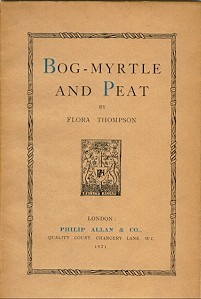
the English poets, novelists and critics - especially Shaw and Yeats. Her first book was a collection of poems, Bog Myrtle
and Peat. However, she is best remembered for three autobiographical volumes: Lark Rise (1939), Over to Candleford
(1941) and Candleford Green (1943), reissued in one volume as Lark Rise to Candleford (1945). A fourth volume,
Still Glides the Stream, was published posthumously in 1948. Flora Thompson died at Brixham, Devon on 21 May 1947.
Lark Rise
1
Poor People's Houses
THE hamlet stood on a gentle rise in the flat, wheat-growing north-east corner
of Oxfordshire. We will call it Lark Rise because of the great number of skylarks which made the surrounding fields their
springboard and nested on the bare earth between the rows of green corn
All around, from every quarter, the stiff, clayey
soil of the arable fields crept up; bare, brown and windswept for eight months out of every twelve. Spring brought a flush
of green wheat and there were violets under the hedges, and pussy-willows out beside the brook at the bottom of the 'Hundred
Acres' ; but only for a few weeks in later summer had the landscape real beauty. Then the ripened cornfields rippled up to
the doorsteps of the cottages and the hamlet became an island in a sea of dark gold.
To a child it seemed that it must
always have been so; but ploughing and sowing and reaping were recent innovations. Old men could remember when the Rise, covered
with juniper bushes, stood in the midst of a furzy heath - common land, which had come under the plough after the passing
of the Inclosures Acts. Some of the ancients still occupied cottages on land which had been ceded to their fathers as 'squatters'
rights', and probably all the small plots upon which the houses stood had originally been so ceded. In the eighteen-eighties
the hamlet consisted of about thirty cottages and an inn, not built in rows, but dotted down anywhere within a more or less
circular group. A deeply rutted cart track surrounded the whole, and separate houses or groups of houses were connected by
a network of pathways. Going from one part of the hamlet to another was called 'going round the Rise' , and the plural of
'house' was not 'houses' , but 'housen' . The only shop was a general one kept in the back kitchen of the inn. The church
and school were in the mother village, a mile and a half away.
A road flattened the circle at one point. It had been cut
when the heath was enclosed, for the convenience in fieldwork and to connect the main Oxford roaed with the mother village
and a series of villages beyond. From the hamlet it led on the one hand to church and school, and on the other to the main
road, or the turnpike, as it was still called, and so to the market town where the Saturday shopping was done.. It brought
little traffic past the hamlet. An occasional farm wagon, piled with sacks or square-cut bundles of hay; a farmer on horseback
or in his gig ; the baker's little old white-tiled van; a string of blanketed hunters with grooms, exercising in the early
morning; and only one of the old penny-farthing high bicycles at rare intervals. People still rushed to their cottage doors
to see one of the latter come past.
A few of the houses had thatched roofs, whitewashed outer walls and diamond-paned
windows, but the majority were just stone or brick boxes with blue-slated roofs. The older houses were relics of pre-enclosure
days and were still occupied by descendants of the original squatters, themselves at that time elderly people. One old couple
owned a donkey and cart, which they used to carry their vegetables, eggs, and honey to the market town and sometimes hired
out ar sixpence a day to their neighbours. One house was occupied by a retired farm ballif, who was reported to have 'well
feathered his own nest' during his years of stewardship. Another aged man owned and worked upon an acre of land. These, the
innkeeper, and one other man, a stonemason who walked the three miles to and from his work in the town every day, were the
only ones not employed as agricultural labourers
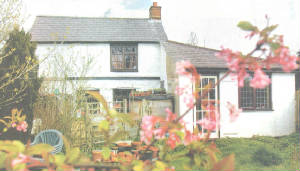
|
| picture taken 2004 |
Christmas In Lark Rise
Christmas Day passed very quietly. The men had a holiday from work and the children from school and
the churchgoers attended special Christmas services. Mothers who had young children would buy them an orange each and a handful
of nuts; but, except at the end house and the inn, there was no hanging up of stockings, and those who had no kind elder sister
or aunt in service to send them parcels got no Christmas presents.
Still, they did manage to make a little festival of it. Every year the farmer killed an ox for the
purpose and gave each of his men a joint of beef, which duly appeared on the Christmas dinner-table together with plum pudding
- not Christmas pudding, but suet duff with a good sprinkling of raisins. Ivy and other evergreens (it was not holly country)
were hung from the ceiling and over the pictures; a bottle of homemade wine was uncorked, a good fire was made up, and, with
doors and windows closed against the keen, wintry weather, they all settled down by their own firesides for a kind of super-Sunday.
There was little visiting of neighbours and there were no family reunions, for the girls in service could not be spared at
that season, and the few boys who had gone out in the world were mostly serving abroad in the Army.
There were still bands of mummers in some of the larger villages, and village choirs went carol-singing
about the countryside; but none of these came to the hamlet, for they knew the collection to be expected there would not make
it worth their while. A few families, sitting by their own firesides, would sing carols and songs; that, and more and better
food and a better fire than usual, made up their Christmas cheer.
|
 |
|
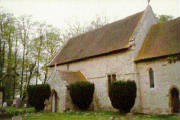
in The Civilian, dated
14th May 1921
from our Lark Rise to Candleford
website
a draft manuscript
by Flora Thompson
A web page sponsored by present-day
residents of Cottisford (Fordlow) and
Juniper Hill (Lark Rise) who share with
many people round the
world a warm affection
for Flora Thompson as
revealed by her writings
our website on Flora Thompson
and her most famous of books
called Fordlow in
Lark Rise to Candleford
Fringford is Candleford Green
in Lark Rise to Candleford
a brief biographical overview
from the
Twickeham Museum website
a page from our
The Prospect Before Us
website
ten Church of England parishes
which include Cottisford and
Fringford
|
| Philip Allen & Co, London |
|
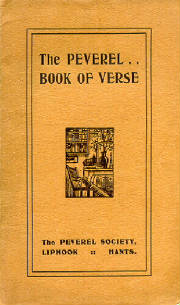
| The Peverel Society |
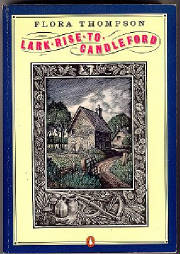
|
| Penguin Books |
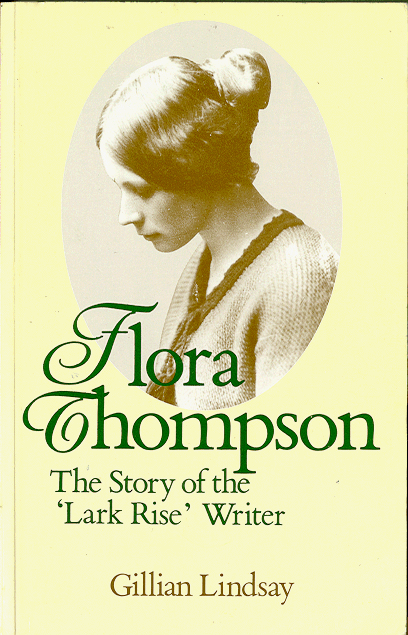
|
| Robert Hale |
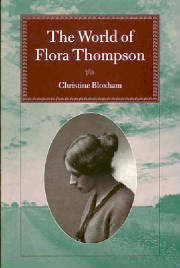
|
| Robert Dugdale |
|
|
|
|
|
|
|
|
|
|
|
|

![Flora Thompson 1921 [click for larger image]](/imagelib/sitebuilder/misc/show_image.html?linkedwidth=actual&linkpath=https://thewildsideoflife.tripod.com/sitebuildercontent/sitebuilderpictures/flora1921.jpg&target=tlx_new)


