|
![[click for larger image]](sitebuildercontent/sitebuilderpictures/.pond/gladenewforest1906gejeans.jpg.w300h225.jpg)
|
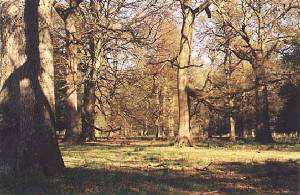
| Glade. New Forest. 1906 |
The literature of trees ranges from the recorded myths of antiquity to the learned treatise of timber
research scientists in this, the electronic age. Some have always known the value of their forests, not merely as a material
asset but also for the religious personification that seemed to be vested in the great flora. Indeed, all civilisations have
cherished them in poetry and religious allegory. This legacy of the tree is still apparent even in the more sober writings
of the latter-day arborists and conservationists, though it may now appeal to a minority audience. The most prosaic would
agree that trees, apart from their functional and structural attributes, are natural works of art, possessing dimensions that
no other living things display. As single specimens on open land, large spreading trees cchallenge the artist and excite the
poet. The mathematically-minded find problems of purchase and strength to tease them, the apparent paradox of grace and strength
often seeming at odds with the rules and formulae of the theory of structures, yet never in conflict. In their natural state,
trees owe nothing to human-kind for their growth and development, being self-generating and self-supporting, only asking space
for their fulfilment. Little wonder at their universal appeal.
Woodlands of England
(Ashley Hutchings/Dave Whetstone)
There's a song that they're singing, the Woodlands of England.
If you stand very still, you might
hear on the breeze.
They sing a lament for the loss of their brethren,
And the words they are singing are these:
In the springtime, we'll bring you the fragrance of blossoms;
In the summer, present you with fruits
of all kind.
In the autumn, we'll shower you with gold and with amber.
In the winter, our kindling you'll find.
Some of us are old-timers. We've known many voices,
Heard Rosalind's laughter, Giles Winterbourne's
call,
Heard the woodpecker beat a tattoo as the day breaks.
Now he beats the retreat for us all.
There's a song that they're singing, the Woodlands of England.
If you stand very still you might
hear on the breeze.
They sing a lament for the loss of their sisters,
And the words they are singing are these:
And soon there'll be nowhere to whisper your secrets,
Nowhere to hide all your anger and pain,
Nowhere
for crying and nowhere for dying,
Nowhere for silence to reign.
There's a song that they're singing, the Woodlands of England.
If you stand very still you might
hear on the breeze.
But in the sound air gets fainter and fainter.
It is vanishing now with the trees.
|
 |
|
 |
|
|
|
|
Shakespeare knew
this forest well
a forest in the making: a place of
200 square miles spanning three
counties in the English Midlands.
you can witness and enjoy its
physical creation and be involved in
its development as part of
the nation's future heritage.
an opportunity to see this part
of the English countryside at
its best. The Royal Forest of Dean
was designated as a
National Forest Park in 1938,
the first in England.
Tony Kirkham and Jon Hammerton,
two of TV's best known tree lovers,
return to the small screen in a
nationwide search for the trees that
made Britain. Fridays on BBC Two
at 7.30pm from 15 September

|
| . |
|
|
|
|
|
|
|
|
|
related internet links
|
|
Scene IV
by William Shakespeare
in the Forest of Arden
a novel by
Hamilton Wright Mabie
1846-1916
published in 1891

|
| . |
|
|
|
|
|
|
|
|
|
|
|
|
|
|
photograph credits
|
|
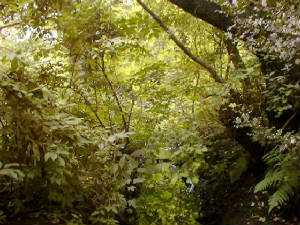
the photograph of Moseley Bog is
to be found in the Tolkien Trail
section of a truly amazing website,
to know about Birmingham , UK,
and more
A Glade in the New Forest: 1906
Edited by G. E. Jeans, M.A., F.S.A .
the image and others are to be found
on a really eclectic website
Massive thanks Liam!
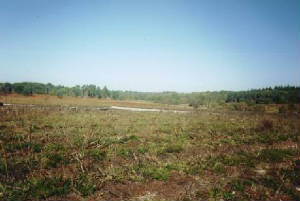
the photograph at the head of this table,
a general prospect of The New Forest
(Neuro-Linguistics Programme)
website. Thanks people!

|
|
|
|
|
|
|
|
|
|
|
|

![[click for larger image]](/imagelib/sitebuilder/misc/show_image.html?linkedwidth=actual&linkpath=https://thewildsideoflife.tripod.com/sitebuildercontent/sitebuilderpictures/gladenewforest1906gejeans.jpg&target=tlx_new)